The Uncanny Valley of Hospitality
When AI Chatbots Cost You 5-Star Reviews
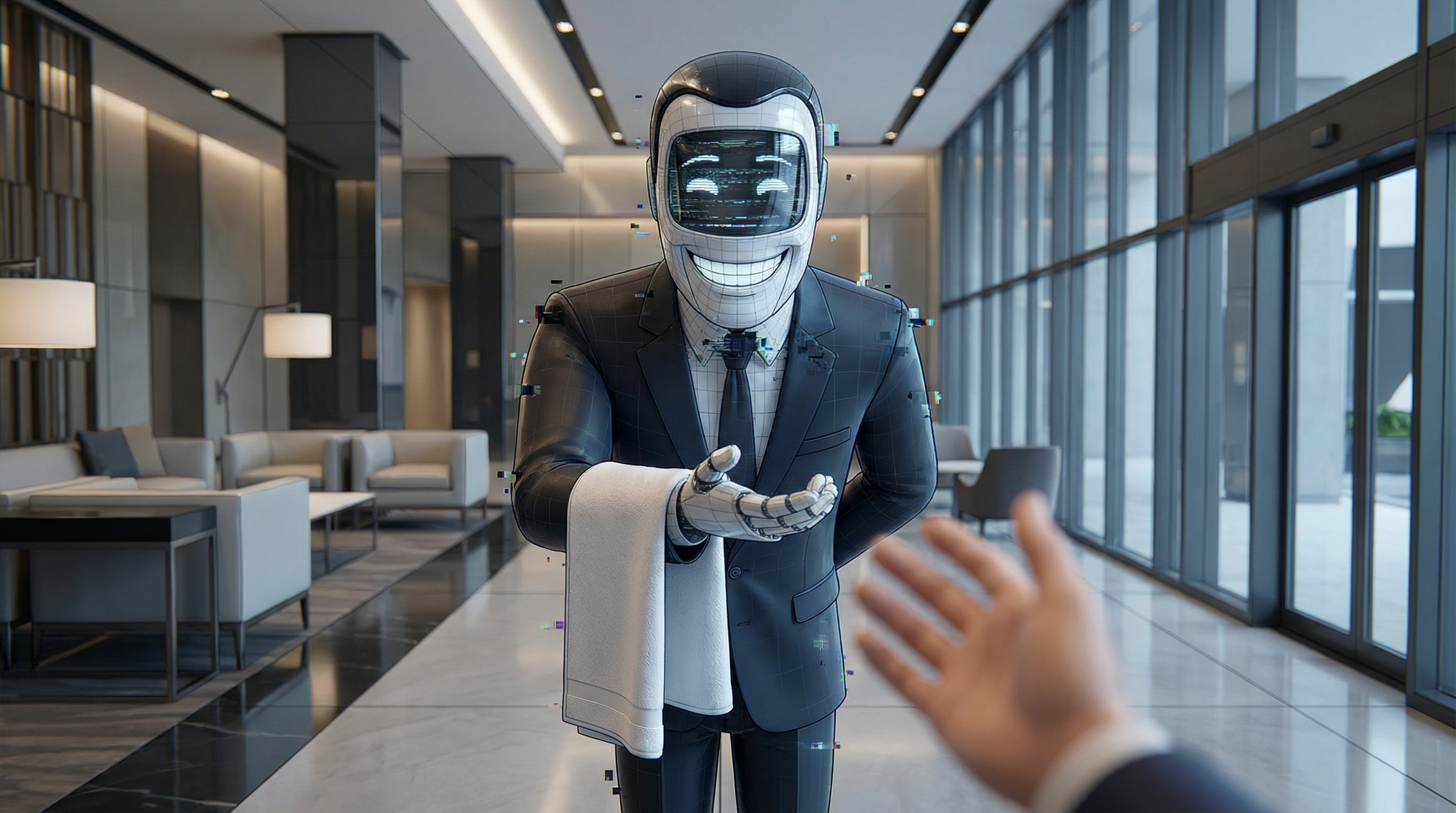
The vacation rental industry has gone all-in on AI guest messaging. According to Hostaway's research, 70.1% of property managers now integrate AI tools into their operations.
But here's what the vendors won't tell you: 64% of customers would prefer that companies didn't use AI for customer service, according to Gartner's 2024 survey. The primary fear? Being "walled off" from humans.
The operators winning with AI aren't the ones automating everything. They're the ones who understand where AI helps and where it destroys trust.
The Hybrid Advantage
The data is clear: AI-hybrid support models outperform human-only models in guest satisfaction, but only when designed with strict guardrails.
According to Aeve AI's industry comparison, optimized hybrid systems deliver:
- +14% to +22% CSAT increase
- ~2.1 second response times (24/7)
- 70-90% resolution rate for routine queries
- -28% to -40% cost reduction
GrandStay Hotels reported a 22% CSAT increase after implementing AI chatbots, driven by instant responses to routine queries.
Get more insights like this
Weekly STR tech updates. No spam.
The Trust Threshold
The difference between NPS-accretive and NPS-destructive AI is scenario-based routing.
According to Zendesk's 2025 CX Trends Report, 67% of consumers are willing to delegate routine tasks to AI assistants. But tolerance evaporates in high-stakes situations.
High Tolerance (Automate):
- Wi-Fi passwords
- Check-out times
- Parking instructions
- Local recommendations
Low Tolerance (Human Required):
- Lockouts
- Safety concerns
- Billing disputes
- Emotional complaints
The Gartner survey found the number one consumer concern regarding AI is "difficulty reaching a person."
The Automation Sweet Spot
According to Aeve AI's comparison data, there's a critical difference between "co-pilot" and "autopilot" tools:
| Tool Type | Automation Rate | Use Case |
|---|---|---|
| Autopilot (Aeve AI) | 70-90% | Full automation of routine queries; policy enforcement |
| Autopilot Entry (HostBuddy) | ~40% | Simpler implementation; significant manual oversight |
| Co-pilot (Guesty AI) | Varies | Drafts responses for human review |
Early co-pilot tools that require human review for every draft fail to deliver the speed benefits of AI while still risking a robotic tone. Users of basic tools report responses can sound robotic and require extensive manual oversight.
Advanced autopilot systems that enforce policies automatically can achieve 87% automation within six weeks.
The Top Complaints and Fixes
Analysis of guest feedback reveals consistent complaints:
| Complaint | Root Cause | Fix |
|---|---|---|
| "I can't reach a human" | AI acts as gatekeeper | Visible "Talk to Host" button; explicit human offer on failure |
| "Wrong info" | Hallucinations or outdated knowledge | RAG connected to live PMS data; policy-first architecture |
| "Sounds robotic" | Generic templates | Brand voice tuning; 64% trust friendly/empathic AI more |
| "Doesn't know who I am" | Lack of context | Unified context with reservation data; full transcript handoff |
According to the Zendesk report, 64% of consumers are more likely to trust AI agents that embody friendliness and empathy.
The Disclosure Requirement
According to Ipsos AI Monitor 2025, 79% of consumers expect companies to disclose when they're using AI.
Hidden AI erodes trust. Be transparent about AI use while highlighting human backup.
The Emergency Lexicon
The most critical design element is emergency routing. Program your AI to recognize specific keywords and immediately trigger human escalation:
- Fire, police, leak
- Code not working, lockout
- Blood, danger, emergency
- Broken, flooding, smoke
These should bypass standard deflection attempts entirely.
The Measurement Protocol
Don't assume AI will automatically lift NPS. According to Salesforce's State of Service report, service leaders expect AI to improve satisfaction by roughly 20%, but this requires measurement.
90-Day Plan:
- Track Interaction-NPS (survey immediately after resolution)
- Monitor CSAT for AI-handled vs. Human-handled tickets
- Run a control group (human-only) vs. test group (AI-hybrid) for 6-8 weeks
Success Thresholds:
- CSAT: Target >4.5/5 for AI interactions
- Response Time: <1 minute for AI, <15 minutes for human escalation
- Containment: 70%+ for routine inquiries
- Escalation Rate: Monitor for sudden spikes (AI failure) or near-zero rates (trapped guests)
The Shadow AI Risk
According to Zendesk's data, there's been 250% year-over-year growth in "shadow AI" (agents using unapproved tools).
This poses security and quality risks. Provide approved, secure tools to prevent staff from using generic, unsecure models.
The Staffing Reality
According to Hostaway's research:
- 24.9% of managers use saved time to improve guest experience
- 37.6% focus on business growth
Automation removes transactional tasks, allowing staff to focus on connection and problem-solving, the elements that actually drive high NPS.
The Bottom Line
The operators who win with AI messaging in 2026 aren't the ones automating 100%. They're the ones targeting 70-80% containment for routine queries while guaranteeing sub-60-second human handoffs for emergencies.
AI should make your guests feel more connected, not less. The moment it becomes a wall between guest and host, you've crossed the uncanny valley into the territory where automation actively hurts your business.