Starlink, Offline Locks, and Freeze Sensors
The Rural STR Tech Stack Nobody Talks About
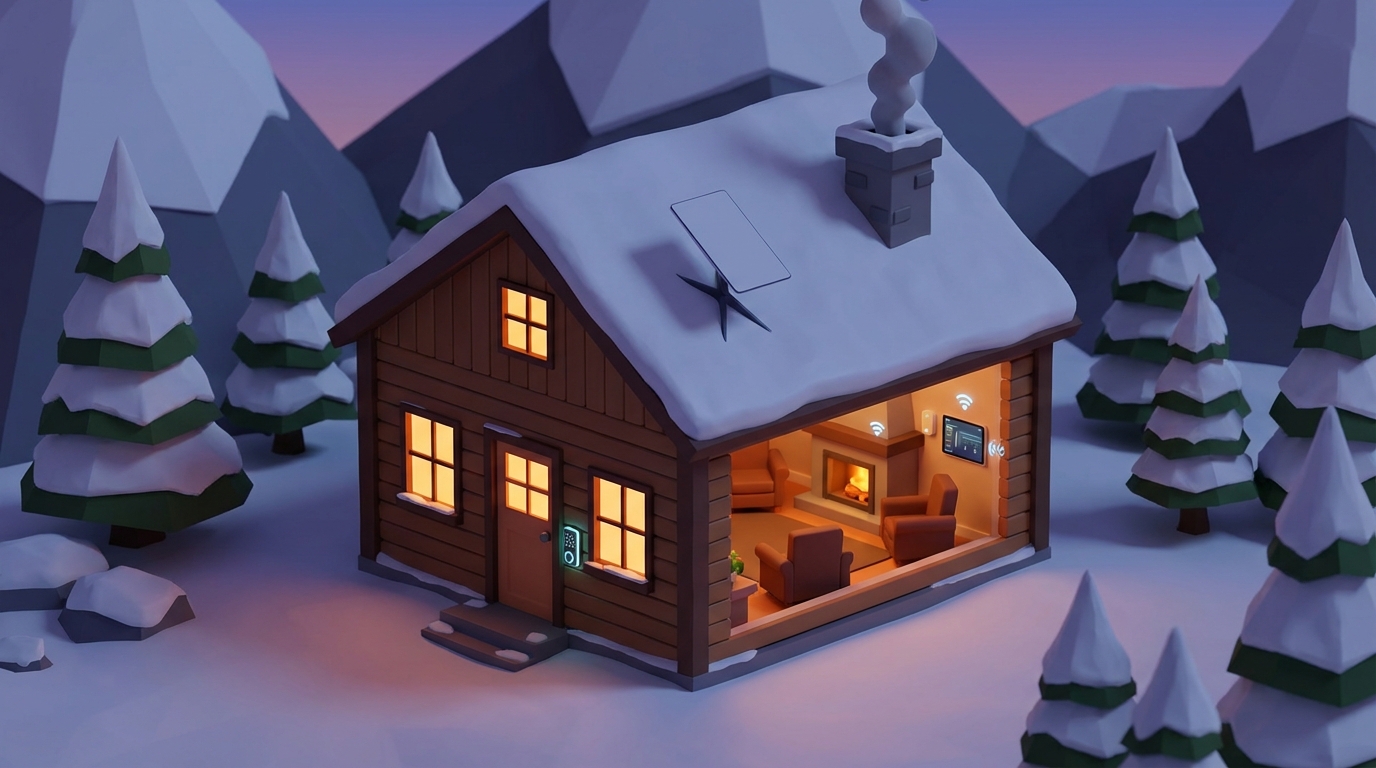
Every vacation rental conference is dominated by urban operators. They talk about Guesty integrations and dynamic pricing and channel optimization. All assuming one thing: reliable internet.
Go 30 minutes outside a major city and that assumption falls apart. The rural cabin. The mountain lodge. The lakefront retreat. Different properties, same problem: the standard tech stack doesn't work when connectivity fails.
Here's what actually does.
The Connectivity Reality in 2026
Starlink's Direct to Cell technology went nationwide in 2025, promising coverage anywhere you can see the sky. T-Mobile launched T-Satellite on the same network.
Great news for guest safety. Bad news for anyone who thought this solved their property management problems.
Direct to Cell supports messaging and select apps (WhatsApp, Google Maps, AccuWeather). It does not support high-bandwidth operations. Your smart thermostat won't run on it. Your security cameras won't upload footage. Your guests can't stream Netflix.
For property operations and guest experience, you still need real internet. Starlink Residential is the answer for most rural locations.
Get more insights like this
Weekly STR tech updates. No spam.
The Starlink Tier Strategy
Starlink's 2026 pricing has segmented into clear tiers:
| Plan | Monthly | Speed | Best For |
|---|---|---|---|
| Residential 100 | $50 | Up to 100 Mbps | Small cabins, 1-2 guests |
| Residential 200 | $80 | Up to 200 Mbps | Standard rentals, 4-6 guests |
| Residential Max | $120 | Up to 400 Mbps | Large properties, 8+ guests |
| Roam Unlimited | $165 | 65-260 Mbps | Mobile/seasonal properties |
The sweet spot is Residential 200 at $80/month. It handles multiple devices streaming simultaneously without the premium cost of Max.
But Starlink alone isn't enough. Satellite internet can drop during heavy weather. The dish can fail. You need a backup.
The Dual-WAN Failover Setup
The industry standard for reliable rural connectivity is a dual-WAN router that automatically switches between Starlink (primary) and cellular (backup).
Peplink MAX BR1 Mini 5G is the go-to hardware, running approximately $499-$549. It supports dual connections, automatic failover, and remote management.
For the cellular backup, Verizon prepaid data plans offer:
- 100GB for $80/month
- 150GB for $100/month
Configure the router to use Starlink as primary and only fail over to cellular when Starlink drops. Set data caps to prevent overage charges.
Monthly OpEx by Reliability Level
| Scenario | Primary | Backup | Total Monthly |
|---|---|---|---|
| Value | Starlink 100 ($50) | Cellular 100GB ($80) | $130 |
| Balanced | Starlink 200 ($80) | Cellular 100GB ($80) | $160 |
| Premium | Starlink Max ($120) | Cellular 150GB ($100) | $220 |
The "Balanced" tier at $160/month is what I recommend for most operators. It's enough connectivity for guest streaming and remote management with failover protection.
The Offline-First Access Strategy
Here's where most rural operators fail: they install WiFi smart locks that require internet to generate codes.
Internet goes down. Guest arrives. Lock won't open. One-star review incoming.
igloohome solves this with "AlgoPIN" technology. The lock generates time-sensitive PIN codes offline. No WiFi needed to create or verify codes.
When a booking is confirmed on Airbnb, igloohome's integration automatically generates a unique PIN valid only for the stay duration. The guest gets it via email. The lock validates it locally. No internet required.
Always install a backup. A hidden mechanical key lockbox (realtor-style) somewhere on the property with a master key. Technology fails. Have a fallback.
The Freeze Sensor Imperative
For mountain and cabin properties, the worst-case scenario isn't a bad review. It's frozen pipes bursting while the property sits empty.
MarCELL Pro Freeze Alarm uses built-in cellular (Verizon/AT&T) and internal battery backup to monitor temperature, humidity, and power status. When thresholds are breached, it sends instant alerts via text, email, and phone call.
The key: it works when power and WiFi are both down. The cellular connection and battery backup mean it can alert you to a freeze condition even during a power outage.
Hardware: ~$219. Subscription: ~$14.95/month (billed annually).
CabinPulse offers similar cellular monitoring specifically marketed for Canadian/remote climates.
The Complete "Max Reliability" Stack
For a high-ADR property where a single failed weekend could cost thousands:
Internet:
- Starlink Residential Max ($120/month)
- Verizon 150GB backup ($100/month)
- Peplink MAX BR1 Mini router ($500 one-time)
- UPS battery backup for network equipment
Access:
- igloohome deadbolt or keybox (offline PIN capable)
- Hidden mechanical key lockbox backup
Monitoring:
- MarCELL Pro freeze/power alarm ($219 + $15/month)
- Reolink LTE camera or local-storage WiFi camera
Total CapEx: ~$1,600-$1,800 Total Monthly OpEx: ~$220 + monitoring
The ROI Math
A single refunded weekend stay due to "no internet" or a frozen pipe burst can exceed $1,500 easily. The hardware investment pays for itself by preventing one major incident.
More importantly: reliable WiFi is a top search filter on Airbnb and Vrbo. Guests filtering for "Fast WiFi" won't see your property if you can't deliver. The connectivity investment directly affects booking conversion.
The Failure Modes to Plan For
| Failure | Early Signal | Impact | Mitigation |
|---|---|---|---|
| Starlink Obstruction | Latency spikes, "Searching" status | Streaming buffers/drops | Mount dish higher |
| Cellular Dead Zone | Low signal on router | Backup fails | External MIMO antenna |
| Lock Battery Death | Low-battery alert | Guest lockout | Quarterly battery swaps |
| Power Outage | MarCELL "Power Lost" alert | Freeze risk, offline systems | UPS for router, auto-drain valves |
The Guest Communication Layer
Rural guests often have different expectations. A printed "Welcome" sheet explaining:
- WiFi name and password
- That WiFi calling works if cell signal is weak
- That T-Mobile phones can text via satellite if truly remote
- Emergency contacts if systems fail
Managing expectations prevents negative reviews when guests encounter conditions different from urban properties.
The Bottom Line
The standard vacation rental tech stack assumes connectivity. Rural properties require an entirely different architecture: redundant internet, offline-capable access, cellular monitoring for critical systems.
The operators who skip this investment learn the hard way. A frozen pipe. A locked-out guest. A refund that costs more than a year of Starlink service.
$160-$220/month in connectivity and monitoring costs is cheap insurance against rural property disasters.
The mountain cabin that looks idyllic in photos is a nightmare if the tech fails. Build the resilient stack first.