Growth Without Gain
Why 43% of Property Managers Are Running in Place
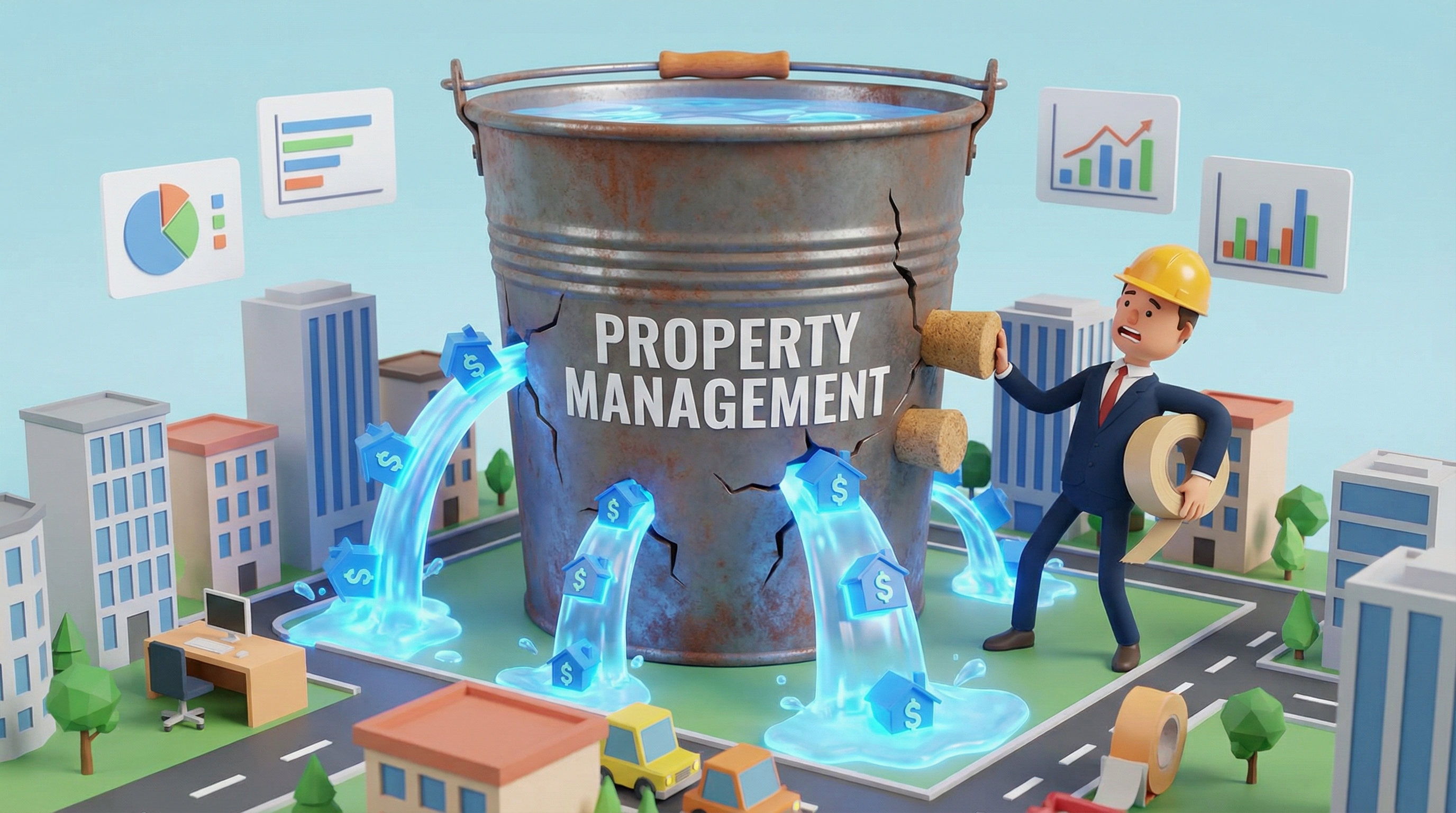
The vacation rental industry is obsessed with growth. Every conference talk is about acquisition. Every Facebook group post is about lead magnets and sales funnels. Property managers brag about how many units they added this quarter.
But the data from 2025 reveals a dirty secret: nearly half the industry is running on a treadmill, and they don't even know it.
The Negative Net Growth Crisis
Here's a number that should terrify every property manager: according to Key Data's 2025 Vacation Rental Industry Outlook, 36% of U.S. property managers experienced negative net growth in the 12 months ending August 2024. They added homes, sure. But they lost more than they added.
And this trend is accelerating:
- 2022: 21% of managers were shrinking
- 2023: 28% of managers were shrinking
- 2024: 36% of managers were shrinking
When you factor in stagnant portfolios (managers who added and lost roughly the same number), nearly 43% of the industry failed to achieve meaningful net growth. They're adding fuel to a tank with a hole in it.
The industry talks about growth like it's a strategy problem. It's not. It's a retention problem disguised as a growth problem.
Get more insights like this
Weekly STR tech updates. No spam.
Why Owners Actually Leave
Every property manager thinks they know why owners leave. Bad guest reviews. Maintenance issues. The property didn't rent as much as expected.
The data tells a different story.
According to Key Data's survey of property managers, here's what actually drives owner churn decisions:
| Factor | % of PMs |
|---|---|
| Revenue not meeting expectations | 33% |
| Quality or depth of communications | 27% |
| Frequency of communications | 14% |
| Clarity and accuracy of revenue projections | 8% |
| Other factors | 18% |
Read that again. The number one reason owners leave is revenue disappointment. But the combined communication factors (quality plus frequency) account for 41% of churn. That's more than revenue alone.
Owners don't leave because a toilet broke. They leave because they feel financially disappointed AND nobody explained why. The communication failure amplifies the revenue disappointment.
Here's the uncomfortable truth: in many cases, the revenue "disappointment" isn't even a management failure. It's market conditions. Post-pandemic normalization. Economic headwinds. But if you're not communicating that context, the owner assumes you failed. According to the same research, 89% of property managers cite an economic slowdown or decreased demand as a primary challenge for 2025.
The Communication Gap Is Regional
This problem hits differently depending on where you operate.
In the Midwest, 50% of property managers cited communication quality as the primary factor influencing owner retention. That's nearly double the national average. Midwest owners, apparently, really want to hear from their managers.
In the West, managers are more likely to plan rate increases (29%), which means they need to proactively justify pricing strategies to skeptical owners.
New England managers reported the least concern about retention. Either they've solved it, or they haven't realized how bad the problem is.
The Economics of Acquisition vs. Retention
Here's where the math gets brutal.
The industry benchmark suggests most managers retain roughly 90% of their properties annually. That sounds fine until you realize it means a 10% churn rate, which implies the average property stays with you for about 10 years. (Rental Scale-Up)
But acquisition has gotten harder. Lead costs are up. Competition for new owners is fierce. If your acquisition rate slows while your churn rate stays constant, your portfolio shrinks.
Large property managers (100+ units) have figured this out. According to Key Data, 71% of large managers now rank owner retention as a top priority for 2025. At the extra-large scale, three-quarters cite retention as a key strategy.
Smaller managers often ignore retention because they assume their personal relationships protect them. Sometimes they're right. Usually they're not.
What High-Retention Managers Actually Do
I've talked to managers running portfolios with sub-5% annual churn. The pattern is consistent: they treat retention as a data problem, not a relationship problem.
They send proactive monthly reports.
Not just revenue summaries. Market-contextualized performance reports. "Your revenue is down 5%, but the market is down 15%. We outperformed." Without that context, an owner assumes you failed. With that context, you're a hero.
They implement owner portals.
One New Zealand property manager, Ohana, implemented Guesty's owner portal and saw "markedly improved owner relationships." According to their case study, owners could see their calendar, their bookings, their revenue in real time. No more calling the PM to ask "do I have any bookings next month?" No more double-bookings from miscommunication. They achieved 158% year-over-year growth while improving retention.
Transparency eliminates suspicion.
They share pacing reports when bookings are slow.
My Beach Vacation Rentals was facing at-risk owners concerned about slow bookings. Instead of making promises, they shared pacing reports proving the slowdown was market-driven, not management-related. They retained the at-risk owners and grew overall revenue by 117% in two years.
The lesson: when an owner is worried, more data is better than more promises.
The Retention Dashboard Framework
If you're running a portfolio and you don't have an owner-facing dashboard, you're playing defense without a game plan. Here's what high-retention managers track and share:
RevPAR comparison. How does this property perform versus the market average? If you're outperforming, say so. If you're underperforming, explain why (property age, amenities, location within the market).
Occupancy context. Raw occupancy numbers mean nothing. Show it relative to comparable properties and market trends.
Booking pace. Are reservations ahead or behind the same time last year? This forward-looking metric helps owners understand what's coming, not just what happened.
Communication log. Document every touchpoint. When an owner claims "nobody told me," you need receipts.
Key Data, Guesty, and several other platforms now offer automated owner reports with these KPIs built in. If your PMS doesn't support owner-facing dashboards, that's a serious gap. Key Data even introduced a Growth & Churn benchmark tool that lets you compare your retention against local competitors.
The Owner Fit Problem
There's another angle nobody talks about: not all owners are worth retaining.
As AirDNA's STR Data Lab podcast noted, "demanding or misaligned owners can be a huge problem." Some owners have unrealistic expectations that no amount of communication will fix. They bought during the 2021 boom, expect 2021 returns forever, and will churn regardless of your performance.
High-performing managers are getting selective about which owners they want in their portfolio. They evaluate potential owners not just on property quality, but on alignment with pricing strategies and communication expectations.
Sometimes the right answer to owner churn isn't better retention. It's better selection at the front door.
The Bottom Line
The vacation rental industry's growth obsession has created a blind spot. Managers pour resources into acquisition while their existing portfolio leaks out the back door.
Here's the uncomfortable math: if 36% of the industry is shrinking, and acquisition is getting harder, retention is no longer optional. It's the primary growth strategy.
The fix isn't complicated:
- Track churn as a core KPI, monthly, not annually.
- Send proactive owner reports with market context, not just revenue numbers.
- Implement an owner portal so transparency is automatic.
- When bookings are slow, share data proving it's market-driven. Don't just promise "it'll get better."
The managers who survive the next five years won't be the ones who mastered acquisition. They'll be the ones who realized that keeping an owner is cheaper than finding a new one.